
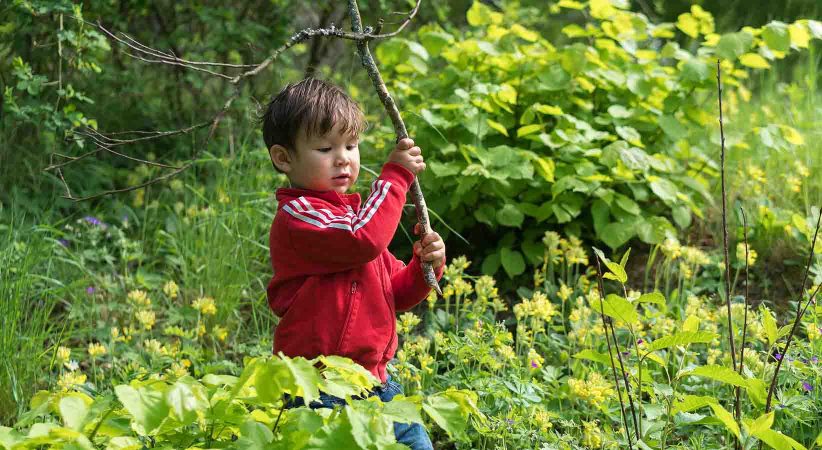
Loose Parts Play Indoors and Outside
Loose parts play is unstructured play that invites children to be imaginative and inventive. There’s all kind of learning happening while children are having fun. It’s good for a wide age range. And loose parts play can be indoors or outdoors.
What are loose parts?
Loose parts are open-ended play materials that spark imagination and invention. They invite creativity. They support learning.
What are the benefits of loose parts play?
Loose parts play helps develop:
- problem solving, experimentation and risk taking
- imagination and creativity
- concentration and focus
- hand-eye coordination
- large and small muscle development
- independence
- self confidence
This type of play is accessible. The materials can be free or inexpensive.
What are examples loose parts?
Loose parts can be natural or synthetic materials. Some can be found in nature. Others can be found around the house. Some can be purchased, but that isn’t necessary.
You can find these loose parts and more outside:
- rocks
- sticks
- dirt or sand
- leaves
- pine cones
You can find these loose parts and more around the house:
- containers: buckets, baskets, boxes
- toys: blocks, dramatic play materials, toys cars and figures
- recyclables: paper, cardboard, wood scraps
- fabric and ribbons
- pots and pans
For ideas on other loose parts you can gather, browse:
- Materials for Loose Parts Play – At Least 100 Ideas!
- Outdoor Loose Parts: 5 Materials to Spark Imagination and Curiosity
- Using Loose Parts for Free Play
Learn more about loose parts play
Find out more about loose parts play online at:
- Exploring Loose Parts Play at Home
- The Learning in Loose Parts
- Loose Parts: Inspiring Play in Young Children
- Loose Parts: What does this mean?
- Loose Parts Play: A Toolkit (Second edition)
- Using Open Ended Materials in Outdoor Play
For more in-depth learning, contact the Decoda Literacy Library for books on loose parts play.
Related Blog Posts
Keeping Kids Active While Staying Indoors
It’s important to keep children’s bodies and minds active while families are staying home. The Canadian 24-Hour Movement Guidelines for Children and Youth (ages 5-17 years) recommend a balance …
Friday Fun: Books in the Movies
This summer explore the recent books adapted into movies and tv shows.
Social-Emotional Learning Strategies
Explore resources to help you incorporate social-emotional learning strategies in your teaching.